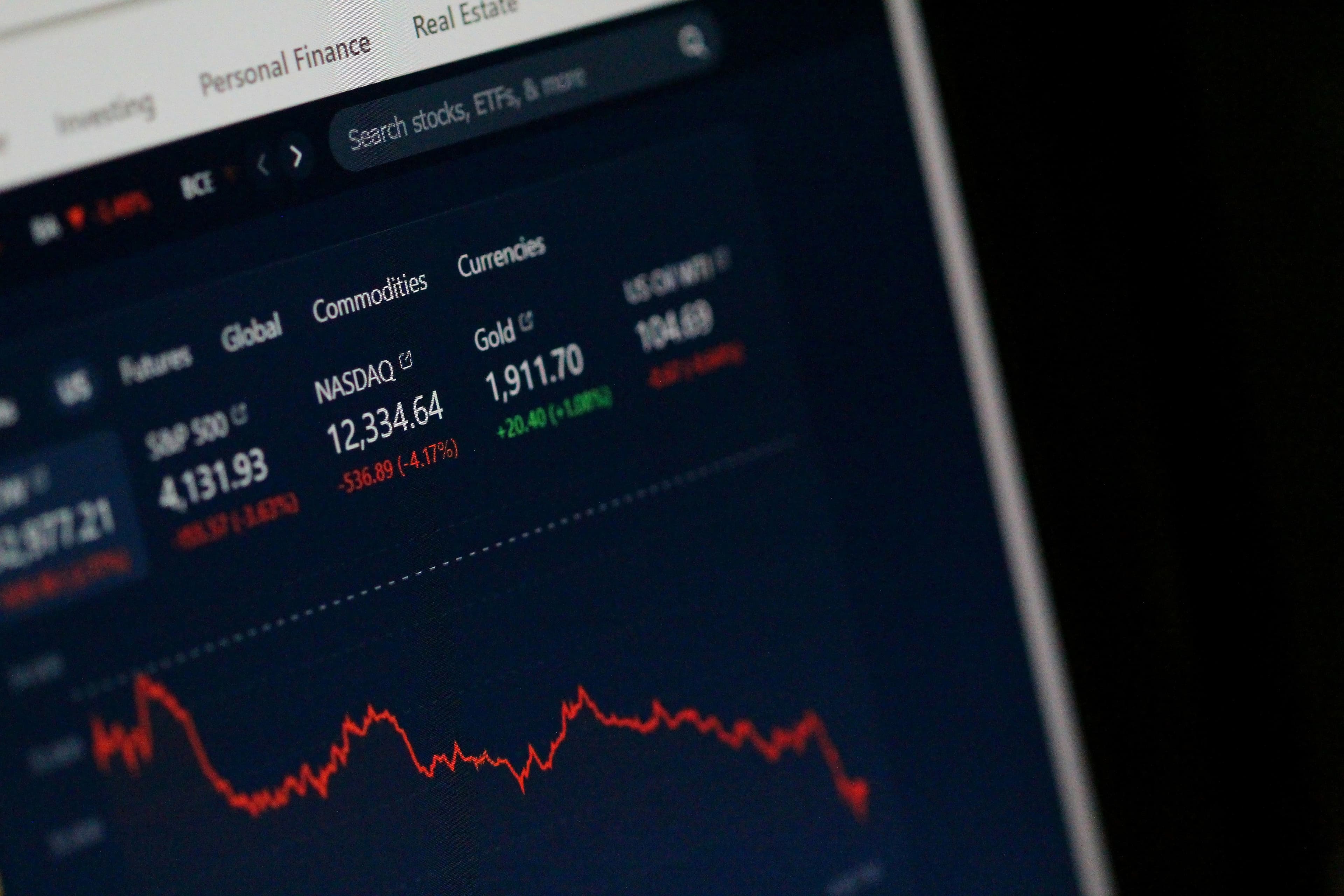


Private market investing carries five categories of risk that public market investing does not: illiquidity, valuation opacity, information asymmetry, structural complexity, and concentrated downside. None of these are reasons to avoid the asset class. They are reasons to choose carefully where you invest and with how much of your portfolio.
The Australian regulatory environment has shifted meaningfully on this question over the past 18 months. ASIC's November 2025 capital markets discussion paper response and its 2026 Key Issues Outlook both flagged private markets as an area of intensifying regulatory focus. For wholesale and sophisticated investors, understanding the genuine risks is more useful than reading either fund manager marketing or the cautious generalities of regulators.
The Australian context: why this matters now
Private markets in Australia have grown faster than most investors realise. Private credit alone has expanded approximately 500% over the past decade to more than A$200 billion in assets under management, according to ASIC Report 820. Australian superannuation funds now hold over A$4.3 trillion in total assets, with some of the largest funds allocating more than 20% to unlisted investments.
This growth has not been accompanied by a corresponding expansion of regulatory visibility. ASIC has acknowledged that it lags international peers in the data available to supervise private markets, and that gaps in funds reporting create what the regulator describes as "constrained supervision" of the sector. ASIC's surveillance of 28 private credit funds between October 2024 and August 2025 found significant variance in disclosure quality, conflict of interest management, and valuation practices.
The takeaway for individual wholesale investors is that the asset class is genuinely growing, the regulatory framework supporting it is still maturing, and platform quality varies considerably. Choosing where to invest matters more than it would in a public market context where disclosure is standardised by law.
Risk one: illiquidity and the cost of locked capital
The defining feature of private market investing is that you cannot exit on demand. Capital committed to a pre-IPO SPV, a private equity fund, or a venture capital allocation typically remains locked until a defined liquidity event such as an IPO, acquisition, secondary sale, or fund wind-up.
Liquidity event timing is the single most important variable wholesale investors tend to underestimate. A pre-IPO position acquired 12 months before an anticipated IPO carries different illiquidity characteristics than one acquired four years before. The first might convert to listed shares within a year. The second exposes you to multiple potential delays, refinancing rounds, and changes in the IPO timeline.
Cambridge Associates' first-half 2025 benchmark commentary provides useful framing here. Over the three years to June 2025, US private equity managers called 1.5x as much capital as they distributed to limited partners. That ratio reflects how much of the asset class is currently in capital deployment mode rather than capital return mode. For investors who need liquidity within shorter horizons, this matters.
The structural answer to illiquidity risk is portfolio sizing, not platform choice. Pre-IPO and private market allocations should generally represent a minority share of an overall portfolio. Capital committed to these structures should be capital you can credibly afford to have inaccessible for five to seven years, sometimes longer. Investors who pursue private markets with funds they may need at short notice are taking on a risk that no platform can mitigate.
A well-structured platform can provide partial liquidity through secondary marketplace functionality. NonPublic's secondaries marketplace allows existing investors to find buyers for their positions from within the NonPublic investor ecosystem, creating optionality where none would otherwise exist. This does not eliminate illiquidity risk but it does provide a structured pathway for investors whose circumstances change before a primary liquidity event.
Risk two: valuation opacity and what "value" actually means
Public companies are valued by markets continuously, with prices set by millions of independent transactions and standardised disclosure obligations under continuous disclosure rules. Private companies are not.
A private company's valuation is typically set during primary funding rounds, secondary transactions, or internal tender offers. Between these events, the carrying value reflects an estimate based on the most recent transaction price, adjusted for any material changes in the company's circumstances. When ASIC reviewed private credit funds in its 2025 surveillance program, it identified significant variance in how managers approached valuation, with some funds applying loose definitions of "default" and others lacking robust independent valuation processes.
For pre-IPO equity specifically, valuation opacity creates two practical problems. First, the entry price you pay may not reflect the underlying business's current performance if material time has passed since the last funding round. Second, the value of your holding between funding events can move without any visible market signal, exposing you to surprise repricing when new information surfaces.
The 2022-2023 venture capital market correction illustrates this clearly. Companies valued at peak ZIRP-era multiples in 2021 saw their carrying values cut significantly when private market managers began applying down-round adjustments through 2023. Cambridge Associates' venture capital index recorded seven consecutive negative quarters from January 2022 to September 2023 before beginning to recover.
Mitigating valuation opacity requires three things on the part of the investor: understanding the date and price of the last primary transaction, evaluating whether material time has passed without a repricing event, and accepting that some level of valuation uncertainty is intrinsic to the asset class. On the part of the platform, it requires transparent disclosure of pricing reference points, disciplined sourcing of shares only from credible existing holders, and avoiding the structural conflicts that arise when platforms profit from inflated transaction prices.
Risk three: information asymmetry and incomplete disclosure
Wholesale and sophisticated investors operate without the disclosure protections that apply to retail investors. Under Australian securities law, wholesale clients do not receive Product Disclosure Statements, prospectuses, target market determinations, or Statements of Advice. They typically lose access to the Australian Financial Complaints Authority for dispute resolution.
This trade-off is intentional. The regulatory framework reserves wholesale opportunities for investors deemed financially capable of conducting independent due diligence. In practice, that diligence burden is real. As a secondary-market buyer of pre-IPO shares, your information set is materially smaller than what the company's founders, board members, lead institutional investors, and existing employees are working with. You see what the company chooses to disclose. You do not see internal projections, board materials, customer churn data, or near-term commercial pipeline detail unless the company elects to share it.
ASIC has recently flagged information asymmetry as one of its priority concerns. The regulator's 2026 Key Issues Outlook specifically identifies retail exposure to private markets as a focus area, with thresholds as low as A$2,000 enabling participation in inherently less transparent products. While wholesale investors operate at a different scale, the underlying observation about disclosure quality applies more broadly.
The honest position for any platform operating in this space is to acknowledge that information asymmetry cannot be fully eliminated. What it can do is mitigate the gap. Platforms that conduct independent diligence on the companies they list, provide detailed deal memos with verified financial information, source shares only from credible existing holders, and disclose all fee structures clearly are operating closer to the standard of disclosure that retail investors take for granted. Platforms that act as passive marketplaces with minimal verification expose investors to materially higher information risk.
For the companies featured on the NonPublic platform, the diligence process includes verification of the source of shares, review of the company's most recent financial reporting and funding round documentation, and assessment of the structure under which the SPV is being offered. This does not substitute for the investor's own due diligence. It does, however, narrow the gap between what the platform's investors know and what insiders know.
Risk four: structural complexity and the SPV question
Most pre-IPO investments accessible to Australian wholesale investors are structured through Special Purpose Vehicles, or SPVs. An SPV is a legal entity created for one purpose: to hold shares in a specific private company on behalf of multiple investors who have pooled capital to acquire those shares.
The structure works because most private companies will not directly add dozens of small individual investors to their cap table. The SPV consolidates capital, acquires the shares as one entity, and gives participating investors economic exposure proportional to their contribution.
Three structural features deserve attention before committing capital. The first concerns fees. SPV managers typically charge a management fee at the time of investment, an annual administration fee for the life of the SPV, and a carried interest on profits above a defined threshold. The combined drag on returns can be material. ASIC's Report 820 found that opaque fee structures and poorly disclosed margin retention were among the most consistent issues across the private credit funds it surveilled.
The second concerns governance. Investors in an SPV do not appear directly on the company's cap table. The SPV holds the shares and votes them as a single block. Your rights as a participant flow through the SPV's governing documents, which define what happens during an IPO, acquisition, tender offer, or forced sale. Not all SPV structures are equally well-drafted, and reading these documents before subscribing is essential.
The third concerns counterparty risk. The legal entity holding your shares needs to be administered competently, registered properly, and operated in line with its governing documents. Platforms that offer SPV access without robust legal infrastructure expose investors to risks unrelated to the underlying portfolio company and entirely related to administrative failure.
NonPublic operates under an Australian Financial Services Licence and structures its SPVs in line with Australian regulatory requirements, which reduces the structural complexity risk that wholesale investors might otherwise carry when investing through unregulated international platforms.
Risk five: concentration risk and the failure of late-stage companies
Pre-IPO investing is sometimes presented as a lower-risk version of venture capital because the underlying companies are larger, more established, and closer to a liquidity event. The history of late-stage private company failures suggests this framing is incomplete.
WeWork was valued at US$47 billion before its attempted 2019 IPO collapsed and the company's value was written down by tens of billions. FTX was valued at US$32 billion in early 2022 before declaring bankruptcy in November of that year. Theranos reached a US$10 billion valuation before its underlying business was revealed to be largely fraudulent. In each case, prominent institutional investors, sophisticated diligence processes, and high-profile boards did not prevent the loss.
The lesson is not that all late-stage private companies will fail. The vast majority do not. The lesson is that late-stage valuations and prominent backers do not guarantee outcomes, and that concentration in a single company carries genuine binary risk regardless of how widely admired the business may be.
The structural answer is diversification across multiple positions, multiple sectors, and multiple vintage years. Investors with capital deployed across SpaceX, Anthropic, OpenAI, Anduril, and a broader basket of private companies have meaningfully different risk profiles than investors who put their entire pre-IPO allocation into a single name. NonPublic's investment model supports this diversification approach by sourcing deals across early-stage, growth-stage, and late-stage opportunities, alongside venture capital and private equity fund allocations.
Sizing also matters. Wholesale investors who allocate 5% of a portfolio to a specific pre-IPO position face a different downside than those who allocate 30%. The asset class can produce strong long-term returns. It can also produce total losses on individual positions. Both can be true simultaneously, and portfolio construction is the variable that determines which outcome is survivable.
What private equity returns actually look like
It helps to ground the risk discussion in actual return data, since the conversation around private markets often oscillates between unrealistic optimism and unwarranted pessimism.
Cambridge Associates' US Private Equity Index returned 3.9% in the first half of 2025, with US Venture Capital returning 6.4%. Over longer horizons the picture differs. Hamilton Lane's 2025 Market Overview estimates that A$1 invested in private equity in 2015 would have grown to approximately A$3.96 by 2024, against A$3.51 for the S&P 500 and A$2.61 for the MSCI World Index over the same period.
A 2025 Fisher College of Business study found top-quartile US private equity funds delivered a 22.5% internal rate of return between 2000 and 2020, exceeding the public market benchmark by 35%. Median manager performance was materially weaker.
Return dispersion is the relevant insight here. The gap between top-quartile and median private market managers is substantially wider than in public markets, where most active managers cluster around an index benchmark. Manager and platform selection matter more in this asset class, both for upside and for downside.
How NonPublic addresses these risks structurally
The risks set out above are intrinsic to private market investing. No platform eliminates them. What a well-structured platform can do is reduce the avoidable risks while leaving investors clearly informed about the unavoidable ones.
NonPublic's approach is built around four operational principles that map directly onto the risks discussed above.
The first is regulatory structure. NonPublic Pty Ltd holds Australian Financial Services Licence #482668 and operates under the Corporations Act 2001, with all offers restricted to wholesale and sophisticated investors as defined under Australian law. This regulatory framework distinguishes NonPublic from offshore platforms that operate outside Australian jurisdiction, where investor recourse and oversight are materially weaker.
Deal flow on the platform is curated rather than open. The team sources opportunities across early-stage, growth-stage, and late-stage private companies, applying diligence to the source of shares, the structure of the SPV, and the credibility of the underlying business. Capital has been deployed through NonPublic into companies including SpaceX, OpenAI, Anthropic, Anduril, Perplexity, Discord, and Databricks, with over A$150 million in assets under administration on a mark-to-market basis.
Fee structures are disclosed at the point of subscription. Investors know what they are paying before they commit capital, not after they review their first annual statement. This addresses one of the issues ASIC has most consistently flagged in its private credit surveillance work: opaque margins and undisclosed fee retention.
Liquidity, where it exists, is structured rather than implied. The NonPublic secondaries marketplace provides existing investors with optionality to find buyers for their positions from within the platform's investor ecosystem. This does not transform pre-IPO holdings into liquid assets, but it does create a defined pathway for circumstances where an investor needs to exit before a primary liquidity event.
Each of these features addresses a specific risk category without claiming to eliminate the underlying asset class risk. Wholesale investors retain the responsibility for their own due diligence, their portfolio sizing decisions, and their assessment of whether private market exposure is appropriate for their financial circumstances.
A reasonable framework for participation
Private market investing is not for every wholesale investor, even those who qualify under the financial thresholds set out in the Corporations Act. Investors with concentrated retirement timelines, low risk tolerance, or limited capacity to absorb illiquidity should think carefully before allocating significant capital to the asset class.
For investors who do choose to participate, the parameters that historically distinguish successful outcomes from poor ones are reasonably consistent. Allocation should be sized as a minority share of total portfolio, typically between 5% and 20% depending on individual circumstances. Capital committed should be capital you can afford to have inaccessible for five to seven years. Diversification across multiple positions, sectors, and vintage years reduces concentration risk. Platform and manager selection materially affects outcomes given the wide return dispersion in the asset class.
Investors who pursue private markets as a core component of a long-term portfolio strategy, rather than as a tactical bet on a specific outcome, tend to fare better through market cycles.
Considering private market exposure?
Private market investing through NonPublic is available to Australian wholesale and sophisticated investors who meet the eligibility requirements under the Corporations Act 2001. The platform provides access to pre-IPO companies, venture capital and private equity funds, and a secondaries marketplace, with full disclosure of fees and structures at the point of investment.
Investors evaluating whether the asset class fits their circumstances may find additional context in our 2025 Private Markets Landscape report. To discuss specific opportunities, book an introduction call with our team.
The Pre-IPO & Private Investment Marketplace for Australian Wholesale Investors
Get started today to learn how NonPublic can give you access to exclusive deals.
Get Started